The School of Science focuses on disciplinary plus a wide range of interdisciplinary courses to broaden students’ perspectives and knowledge in the Sciences. The high-quality programs are conducted by qualified teachers, along with guest faculty members from the industry, subject experts, and independent researchers. The school also collaborates with industry for research and development on real life projects, making students industry ready.
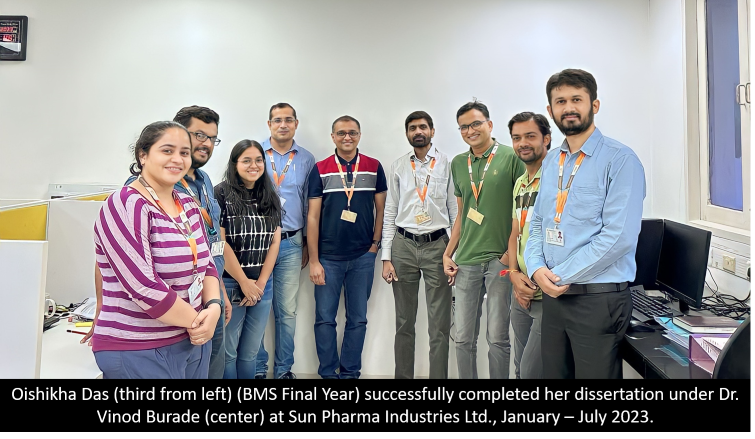
A robust placement assistance program bridges the gap between the student’s aspirations and industry expectations. Some of the leading companies in pharmaceuticals and clinical research employ students from School of Science at NUV.
Integrated BSc-MSc Botany (Climate-Smart Plant Systems and Precision Agriculture)
Is traditional Botany enough for a world facing climate change and food security? Plants now determine food security, climate resilience, carbon balance, drug discovery and sustainable materials. Yet most Botany programs still focus on structure and classification. That is why we created a new kind of Botany degree: Integrated BSc-MSc Botany (Climate-Smart Plant Systems and Precision Agriculture).
The Integrated BSc-MSc Botany (Climate-Smart Plant Systems and Precision Agriculture) is a multidisciplinary five-year program designed to prepare students to address contemporary agricultural and environmental challenges. It combines classical plant sciences with emerging fields such as climate-resilient crop systems, precision agriculture, plant biotechnology and digital farming.
The curriculum emphasizes experiential learning, research-driven training, and industry engagement, equipping students with skills in sustainable crop production, climate adaptation, plant-based innovation, and modern agricultural technologies. Students gain strong theoretical knowledge along with laboratory expertise, field exposure, and professional competencies required for careers in research, industry, entrepreneurship, and environmental consultancy.
Specialized coursework includes plant physiology, genetics, molecular biology, plant stress biology, crop improvement, plant conservation, and biotechnological applications relevant to climate-smart agriculture. The Academic Advisory Board regularly reviews the curriculum to align it with evolving agricultural technologies, climate resilience strategies, and industry needs.
The Navrachana University Centre for Environment Research and Innovation provides an interdisciplinary platform for students and faculty to engage in research on climate change, biodiversity conservation, ecosystem resilience, and sustainable agriculture. Additionally, the Navrachana University Centre for Public Health, in collaboration with the University of Arizona, offers opportunities to explore links between plant biotechnology, food security, and public health, enriching the program’s global outlook.
Graduates are well-prepared for careers in climate-resilient agriculture, precision farming technologies, plant system research, environmental consultancy, and agri-biotechnology industries. Overall, the program provides a strong blend of foundational knowledge, advanced research training, and hands-on exposure, enabling students to contribute to sustainable agriculture, food security, and climate solutions while positioning the program as a leader in modern botany and precision agriculture education.
The Integrated BSc-MSc Botany (Climate-Smart Plant Systems and Precision Agriculture) is a future-oriented program that builds a strong foundation in plant sciences while integrating advanced knowledge in climate resilience, sustainable agriculture, and precision farming technologies. The curriculum includes core courses, discipline-specific electives, research components, and a university foundation program, ensuring interdisciplinary and industry-relevant learning. Students can select electives across Navrachana University (NUV) to tailor their academic pathway to their interests and career goals.
Foundational courses such as Plant Diversity, Cell and Molecular Biology, Genetics, Plant Physiology, Plant Taxonomy, Biochemistry, Ecology, Climate Science, and Research Methodology provide a strong base in plant systems and environmental interactions. Advanced modules introduce emerging areas like Precision Agriculture Technologies, GIS and Remote Sensing, Artificial Intelligence in Agriculture, Crop Modelling, Soil Health Management, Plant Stress Biology, and Climate-Resilient Crop Breeding.
Hands-on learning is central to the program through laboratory work, field studies, precision farming demonstrations, and collaborative projects with research institutes and industry partners. Advanced electives in Sustainable Agriculture, Agroecology, Plant Biotechnology, Climate Change Biology, Smart Irrigation Systems, and Agricultural Data Analytics allow students to specialize according to their interests.
The program includes seminars, workshops, internships, and a guided postgraduate research dissertation under faculty mentorship, strengthening analytical and research skills. Graduates emerge with strong scientific foundations, technological expertise, and innovation skills, preparing them to address challenges in climate change, food security, and sustainable agriculture, and positioning them at the forefront of modern plant sciences and precision agriculture.
10 Semesters | Full-time | Five-year | Integrated BSc-MSc Program
Fee Structure: Rs. 49680/- per semester
For Detailed Curriculum click here
Navrachana University, a premier university in Vadodara, known for its innovative and forward-looking approaches to education has now implemented a choice-based curriculum for its students. It is aimed at transforming the student learning experience, empowering them to “tailor-make” their own degree.
The need of the hour today is to create highly skilled professionals who possess a broad-based outlook enabling them to collaborate, understand and empathize with larger sociocultural realities.
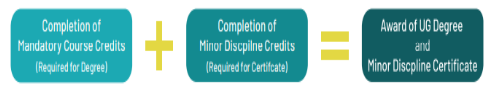
Navrachana University offers its students’ the opportunity to pursue a Minor discipline along with their major degree program, following one’s interest, which facilitates the growth of additional skills. Minors are a means of diversifying the understanding of a topic and a reflection of who one is as an individual. For example, a student of Bachelor of Business Administration (BBA) can choose a minor in ‘Interior Design’.
To attain a Minor, the students will need to do 18 credit worth of courses designated to diversify interests and gain a professional edge!
List of Minors
Health Science | Computer Science & Engineering | Business Law | Interior Design | General Management | Mechatronics | Film Production
The Khoj program has been one of the defining social immersion activities at Navrachana University. Conceived right during the inception of the University, the Khoj program was envisaged to be a vehicle to inculcate social awareness, empathy, and interdisciplinary skills among our students, with a larger aim of proposing solutions to societal problems through innovation, it is through intense, rigorous, and field-based activities that students come up with an increased sense of empathy and awareness towards their surroundings. This program was further strengthened by engaging on topics that are relevant and can be made visible to society at large, the program is conceived as a larger and more ambitious activity that is undertaken by students and faculty members during the semester break under the umbrella of KHOJ WINTER SCHOOL.
Thematic Clusters:
Public Health & Hygiene | Mental Health | Environment & Sustainability | Waste Management | Urban Development | Economics & Social Issues.
To compete for the degree in Integrated BSc-MSc Botany (Climate-Smart Plant Systems and Precision Agriculture), students must complete a research project or on-the-job training (guided research) and a research presentation (guided research) within the last semester (Sem X).
Candidates who have cleared 10+2 in science stream (all Boards) examination with minimum 50% are eligible for admission.
Eligible candidates are required to appear for an interaction with experts of the School of Science.
Scholarships at Navrachana University
At Navrachana University, we believe in rewarding academic excellence and nurturing talent. Our scholarship programs are designed to support and encourage meritorious students across various disciplines. Explore the opportunities available and take a step closer to achieving your academic goals with us.
Pre-teaching sessions, conducted at the beginning of every semester, serve as vital preparatory sessions aimed at providing students with foundational knowledge and essential skills necessary for success in their upcoming courses. These sessions typically encompass a variety of activities and discussions designed to orient students, set academic expectations, and foster a conducive learning environment.
Description of what pre-teaching sessions may entail:
A monthly course audit is a systematic review process conducted to assess the progress and effectiveness of ongoing courses.
Academic Advisory Board consists of Program matter experts who provide guidance, expertise, and innovative pedagogy and continuous improvement within the academic.
Student feedback serves as a valuable tool for assessing and improving the effectiveness of teaching and learning practices, fostering a culture of continuous improvement, and enhancing overall academic quality.
A mentorship program for BSc Microbiology students is designed to provide invaluable guidance, support, and opportunities for personal and professional development within the field of microbiology.
Ratio of Mentor: Mentee is 1:15.
Academic Advisors play a crucial role in guiding students through the selection, planning, and completion of elective courses and minors within their academic programs.