The School of Science focuses on disciplinary plus a wide range of interdisciplinary courses to broaden students’ perspectives and knowledge in the Sciences. The high-quality programs are conducted by qualified teachers, along with guest faculty members from the industry, subject experts, and independent researchers. The school also collaborates with industry for research and development on real life projects, making students industry ready.
A robust placement assistance program bridges the gap between the student’s aspirations and industry expectations. Some of the leading companies in pharmaceuticals and clinical research employ students from School of Science at NUV.
Integrated BSc-MSc Microbiology (Microbial Systems, Biosecurity & Precision Health)
The Integrated BSc-MSc Microbiology (Microbial Systems, Biosecurity & Precision Health) is a unique five-year integrated program designed to prepare students for the dynamic and ever-expanding field of Microbiology. Focused on cultivating essential skills in both disciplinary and interdisciplinary areas, the program places a strong emphasis on experiential learning and research. It offers a comprehensive curriculum with three distinct specializations (Medical, Agriculture and Food Microbiology) that not only strengthens a student’s knowledge base but also enhances their laboratory skills, fostering a holistic developmental approach.
The program facilitates research, training, and education in the crucial field of Public Health through the Navrachana University Centre for Public Health (NUCPH), in Climate change through Navrachana University Center for Environmental Research and Innovation (NUCERI) as well as in applied aspects involving Artificial Intelligence (AI) through Navrachana University Center for Interdisciplinary Computing Science (NUV-CICS). Recognizing the paramount importance of computational biology, public health and climate change in the current decade, this partnership enhances opportunities for students to engage in impactful research and gain insights from a broader perspective.
In essence, the Integrated BSc-MSc Microbiology (Microbial Systems, Biosecurity & Precision Health) program at NUV not only builds a solid foundation in microbiology but also equip students with the skills that foster innovation, promote sustainable practices, and tackle public health challenges. With strategic collaborations and a progressive curriculum, the program remains at the cutting edge of research and education in the biological sciences.
The Integrated BSc-MSc Microbiology (Microbial Systems, Biosecurity & Precision Health) program at NUV is comprised of mandatory core courses, university foundation program courses and university electives. The mandatory courses include core theory courses, laboratory courses, summer internship and a six-month dissertation or an on-the-job training project. For the university electives, the student must choose a course from a specified university elective course catalogue which is released in the beginning every semester before the commencement of academics. The university electives serve to acquire diverse technical, interdisciplinary, and professional skills beyond the core courses.
The core courses form the bedrock of the program, providing students with a solid platform in essential areas such as Microbial Taxonomy, Microbial Nutrition, Microbial Physiology and Genetics, Microbial Biochemistry, Microbial cell structure as well as Bio instrumentation and Scientific Enquiry and Research Methodology. These foundational courses lay the groundwork for a deeper exploration of specialized tracks, allowing students to tailor their academic journey based on individual interests and career aspirations.
The program places a strong emphasis on laboratory training and research, offering laboratory rotations and opportunities to engage in research projects in collaboration with faculty or industry partners. The inclusion of advanced specialization courses allows students to further tailor their education by selecting topics that align with their specific interests, such as Medical, Food and Agriculture Microbiology.
Apart from the specialized tracks, students obtain advanced knowledge of the three distinct pathways. The Precision Health track delves into areas like Public Health and Precision Nutrition, Microbial metabolism, Molecular Epidemiology and Diagnostics. The Medical and Pharmaceutical Sciences track offers courses such as Applied Microbiology, Artificial intelligence in microbial science, Bioinformatics, Immunology in Health and Diseases and Clinical Microbiology. For those interested in Environmental and Ecological aspects, the track includes courses like Microbial Ecology, Microbial Diversity, Biosecurity and Biological threat assessment and Environmental Microbiology.
The culmination of the Integrated BSc-MSc Microbiology (Microbial Systems, Biosecurity & Precision Health) is marked by the successful completion and defence of a thesis project or an on-the-job training, where students conduct independent research under the guidance of the faculty or industrial personnel, demonstrating their ability to contribute meaningfully to the advancement of knowledge in the chosen scientific domain. Graduates emerge from the program with a strong foundation in Microbiology, in-depth expertise on their chosen specialization, and the practical skills necessary for success in the dynamic and evolving landscape of Microbiology.
In the summary, the program is designed to equip students with a profound understanding of the fundamental principles and practical applications in the diverse areas of microbiology. Rooted in a multidisciplinary approach, the curriculum is meticulously structured to seamlessly integrate theoretical knowledge with a hands-on experience, thereby preparing graduates for diverse career trajectories in academia, industry, and research.
Specialization* in M.Sc. Microbiology
*Minimum 5 students are required for the specialization
10 Semesters | Full-time | Five-year | Integrated BSc-MSc Program
Fee Structure: Rs. 49680/- per semester
For Detailed Curriculum click here
Navrachana University, a premier university in Vadodara, known for its innovative and forward-looking approaches to education has now implemented a choice-based curriculum for its students. It is aimed at transforming the student learning experience, empowering them to “tailor-make” their own degree.
The need of the hour today is to create highly skilled professionals who possess a broad-based outlook enabling them to collaborate, understand and empathize with larger sociocultural realities.
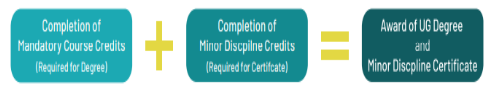
Navrachana University offers its students’ the opportunity to pursue a Minor discipline along with their major degree program, following one’s interest, which facilitates the growth of additional skills. Minors are a means of diversifying the understanding of a topic and a reflection of who one is as an individual. For example, a student of Bachelor of Business Administration (BBA) can choose a minor in ‘Interior Design’.
To attain a Minor, the students will need to do 18 credit worth of courses designated to diversify interests and gain a professional edge!
List of Minors
Health Science | Computer Science & Engineering | Business Law | Interior Design | General Management | Mechatronics | Film Production
The Khoj program has been one of the defining social immersion activities at Navrachana University. Conceived right during the inception of the University, the Khoj program was envisaged to be a vehicle to inculcate social awareness, empathy, and interdisciplinary skills among our students, with a larger aim of proposing solutions to societal problems through innovation, it is through intense, rigorous, and field-based activities that students come up with an increased sense of empathy and awareness towards their surroundings. This program was further strengthened by engaging on topics that are relevant and can be made visible to society at large, the program is conceived as a larger and more ambitious activity that is undertaken by students and faculty members during the semester break under the umbrella of KHOJ WINTER SCHOOL.
Thematic Clusters:
Public Health & Hygiene | Mental Health | Environment & Sustainability | Waste Management | Urban Development | Economics & Social Issues.
Our curriculum includes two compulsory internships within the first four years, scheduled during breaks from Semester III through VIII. The final semester (Semester X) is dedicated to a major project, where students can choose between a research dissertation or industry-based on-the-job training. Both tracks conclude with a guided research presentation to showcase their findings.
Candidates from group “B” or “AB” who have passed their 12th Board exams from a recognized school with minimum 50% aggregate marks.
The candidates are required to submit an online application form with Statement of Purpose (SOP). Admission is based on Merit (12th marks, SOP & interaction).
Scholarships at Navrachana University
At Navrachana University, we believe in rewarding academic excellence and nurturing talent. Our scholarship programs are designed to support and encourage meritorious students across various disciplines. Explore the opportunities available and take a step closer to achieving your academic goals with us.
Pre-teaching sessions, conducted at the beginning of every semester, serve as vital preparatory sessions aimed at providing students with foundational knowledge and essential skills necessary for success in their upcoming courses. These sessions typically encompass a variety of activities and discussions designed to orient students, set academic expectations, and foster a conducive learning environment.
Description of what pre-teaching sessions may entail:
A monthly course audit is a systematic review process conducted to assess the progress and effectiveness of ongoing courses.
Academic Advisory Board consists of Program matter experts who provide guidance, expertise, and innovative pedagogy and continuous improvement within the academic.
Student feedback serves as a valuable tool for assessing and improving the effectiveness of teaching and learning practices, fostering a culture of continuous improvement, and enhancing overall academic quality.
A mentorship program for students is designed to provide invaluable guidance, support, and opportunities for personal and professional development within the field of microbiology.
Ratio of Mentor: Mentee is 1:15.
Academic Advisors play a crucial role in guiding students through the selection, planning, and completion of elective courses and minors within their academic programs.